Age Verification on Adult Sites: What You Need to Know
Age verification is now required on adult websites in 25+ US states and the UK. Learn why it's happening, how it works, and what to expect when you visit.
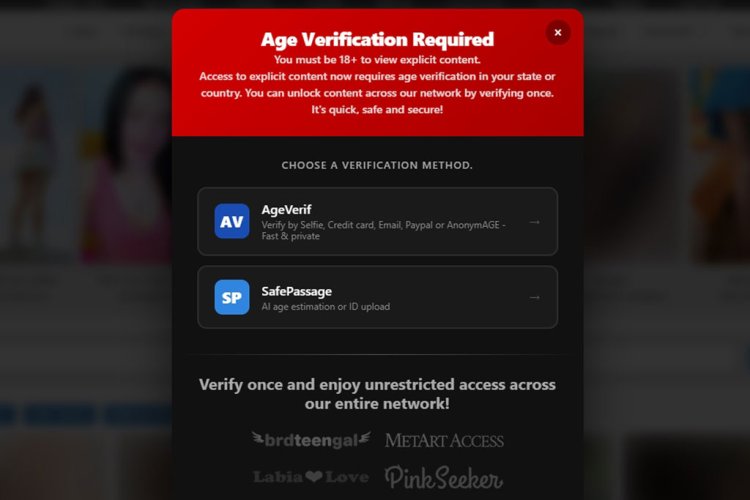
If you've recently visited an adult website and been prompted to verify your age before accessing content, you're not alone. Age verification is now legally required in a growing number of US states and countries and more are expected to follow.
Why is this happening?
Lawmakers across the US, UK, and parts of Europe have passed legislation requiring adult websites to confirm that visitors are 18 or older. The goal is to protect minors from accessing explicit content. Currently, if you're visiting from any of the following US states or from the UK, you'll be asked to complete a verification step:
US states: Alabama, Arizona, Arkansas, Florida, Georgia, Idaho, Indiana, Kansas, Kentucky, Louisiana, Mississippi, Missouri, Montana, Nebraska, North Carolina, North Dakota, Ohio, Oklahoma, South Carolina, South Dakota, Tennessee, Texas, Utah, Virginia, Wyoming
Countries: United Kingdom
How does verification work?
Verification is handled entirely by trusted third-party providers — AgeVerif or SafePassage — depending on the site you're visiting. We never see, store, or handle your personal data. Once verified, your status is saved as a browser cookie that's valid for one year, so you won't need to repeat the process every visit.
A few things worth knowing:
- Verify once, access everywhere. Because all sites in our network use the same providers, one verification covers you across our entire network.
- Clearing your cookies will remove your verification status and require you to verify again.
- Already verified elsewhere? If you've gone through this process on another adult site using AgeVerif or SafePassage, you may already be good to go.
Our honest take
We fully support keeping minors away from adult content. That said, we do have reservations about how these laws are being applied. Currently, only adult (pornography) websites are required to implement verification, while many social media platforms and apps, where far more harmful material is routinely shared, face no such requirements. We believe a more consistent, device-based approach would do a better job of actually protecting young people.
That being said, we comply with the law and want your experience to be as smooth as possible.
If you run into any issues during verification, drop a comment below and we'll do our best to help.
What's Your Reaction?